
Our Google representative just confirmed what we have been watching develop for some time. Nearly 60% of Google searches now end without a single click to an external website. Google’s AI Overviews have reached more than 2 billion monthly users globally, and traditional search engine volume is projected to decline 25% by 2026 as consumers shift toward AI-driven conversational answers.
This is not a surprise. It is a confirmation.
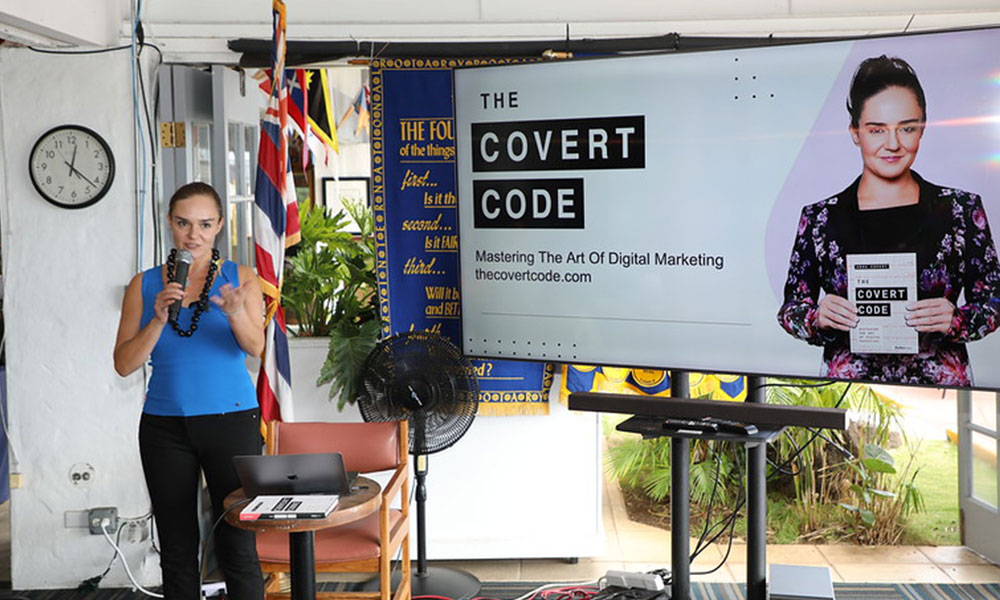
I wrote about this inevitability in my book — you must learn the rules of digital marketing, because the rules are always changing and the companies that understand the game are the ones that stay ahead of it. This is one of those moments.
What This Means for Solar Advertisers
Let’s be direct: Google Ads costs are going up.
Fewer organic clicks means more competition for paid positions, and that pressure will continue pushing cost-per-click higher. If your growth strategy is built primarily on paid search, you need to recalibrate now.
But here is the part that rarely gets mentioned: fewer clicks may also mean fewer opportunities for click fraud. For years, solar companies have absorbed fraudulent ad spend as a cost of doing business. As zero-click behavior grows and AI-driven matching becomes more precise, fraudulent click activity has less room to hide. That is genuinely good news for advertisers who want their budgets working harder on real prospects.
Reduced click volume also means reduced remarketing exposure to the same recycled audience pool. This will naturally right-size remarketing budgets and push overall performance numbers toward more accurate, real conversion data — which is something every serious operator should welcome.
Rethinking Your Paid Search Mix
One move worth considering as search costs rise: shift a portion of your search budget into Performance Max campaigns. Performance Max gives Google’s AI broader latitude to serve your ads across Search, Display, YouTube, Gmail, and — critically — Maps.
For solar companies, map-based ad placement is an underutilized opportunity. Homeowners researching local installers are already in a high-intent mindset, and showing up prominently in Maps puts your brand directly in that decision moment.
Local Service Ads are another option worth evaluating, particularly for solar companies in competitive local markets. LSAs appear at the very top of Google results, above traditional paid ads, and are built around click-to-call — meaning a homeowner taps your ad and calls you directly.
That is extremely high-intent demand.
However, LSAs are not cheap and they require operational readiness. If you do not have a call center, a clear intake process, or the ability to respond quickly to inbound calls, you will pay for leads you cannot capture. LSAs reward companies that are set up to handle hot demand in real time. If that infrastructure is not in place, they can become an expensive lesson.
AI Max for Search Changes the Keyword Game
Google has also expanded AI Max for Search campaigns, bringing advanced query expansion and real-time creative optimization into the conversation. This matters because homeowners are no longer searching in short, predictable keyword patterns. They are asking longer, more specific, more conversational questions.
Instead of only typing “solar panels near me,” a homeowner may now search:
“Is solar still worth it in California after the tax credit changes?”
“Best solar battery option for a shaded roof in Florida?”
“Can I get solar if my electric bill is only $180 a month?”
“Should I lease or buy solar panels in 2026?”
Traditional keyword campaigns can miss a lot of that demand. AI Max is designed to close that gap by using broad match, keywordless technology, landing page signals, existing creative assets, and real-time text customization to capture relevant long-tail queries your campaign may not have been explicitly targeting.
Google’s own data shows advertisers using AI Max for Search campaigns typically see more conversions or conversion value at a similar CPA or ROAS. For solar, the opportunity is not just more volume. The opportunity is better alignment with the way people are actually researching.
Solar suggestion: AI Max should be tested carefully, not blindly. Use strong URL exclusions, clean conversion tracking, clear landing pages, and close monitoring of search terms and generated assets. This is not a “set it and forget it” feature. It is a new layer of AI-powered reach that needs strategic guardrails.
Improved Click-to-Call Ads and Lead Intent Scoring
This is one of the most important updates for solar advertisers.
Solar leads require heavy vetting. Every company knows the problem: renters, shaded properties, bad roof conditions, low credit profiles, wrong service areas, utility mismatch, curiosity clicks, misdials, and people who are nowhere near ready to buy.
Historically, call tracking has relied heavily on call duration. A 90-second call might be counted as a conversion, even if the caller was asking for the wrong company, looking for a job, or had no real solar intent.
Google is now moving beyond that.
With Gemini-powered call analysis and Lead Intent Scores, Google can begin evaluating not just whether someone called, but what happened in the call. The system can identify signals that separate higher-intent prospects from low-quality interactions. Form submissions can also be categorized as high, medium, or low intent based on predictive Google signals.
For solar, this is a major shift.
Instead of optimizing campaigns toward raw form fills and generic phone calls, advertisers can begin pushing the system toward qualified consultations. That means the sales team can prioritize high-intent leads faster, and the bidding model can become smarter over time.
Solar suggestion: solar companies should move quickly to evaluate this feature where available. If a platform can help identify “high intent” leads before a setter ever touches the record, that can reduce wasted call time, improve speed-to-lead, and help smart bidding optimize toward true opportunity — not just form completions.
Journey-Aware Bidding and Funnel Mapping
This is where things get even more interesting.
Solar is not a one-step conversion. A homeowner may click an ad, visit a savings page, use a calculator, request a quote, answer a qualification call, sit for an appointment, receive a proposal, and then take days or weeks to make a decision.
Most campaigns are still only optimizing around the front end of that journey.
That is a problem.
If Google only sees the form submission, it has no idea whether that lead became a qualified appointment, sat for a consultation, received a proposal, or closed. That means the bidding system may continue buying more of the same low-quality leads because it does not understand what actually drives revenue.
Journey-aware bidding changes that.
By sharing more of the lead journey back into Google — including non-biddable conversion actions — advertisers can help Google understand which actions lead to qualified opportunities. That might include calls, form submissions, appointment confirmations, quote requests, sales consultations, proposal stages, or closed deals.
The goal is not to bid on everything. The goal is to teach the system what matters.
For solar, this is the difference between optimizing for “people who fill out forms” and optimizing for “homeowners who become qualified consultations.”
Solar suggestion: this should become part of every serious solar account structure. Your CRM, call tracking, offline conversion imports, lead stages, and sales outcomes need to map back into Google Ads as cleanly as possible. The companies that feed better data into AI bidding systems will have a major advantage over companies still optimizing around raw leads.
Solar Is Already an Answer-First Industry
No homeowner impulse-buys a $30,000 energy system.
Solar is one of the most research-intensive consumer decisions a household makes. Homeowners are asking questions for weeks or months before they ever request a quote.
The difference now is where those questions get answered.
Instead of clicking through five websites, homeowners are asking AI tools directly:
Is solar worth it in my state?
What happens to the federal tax credit?
Should I add a battery?
What should I ask before signing a contract?
Can I still get solar if my roof has shade?
Which solar company should I trust?
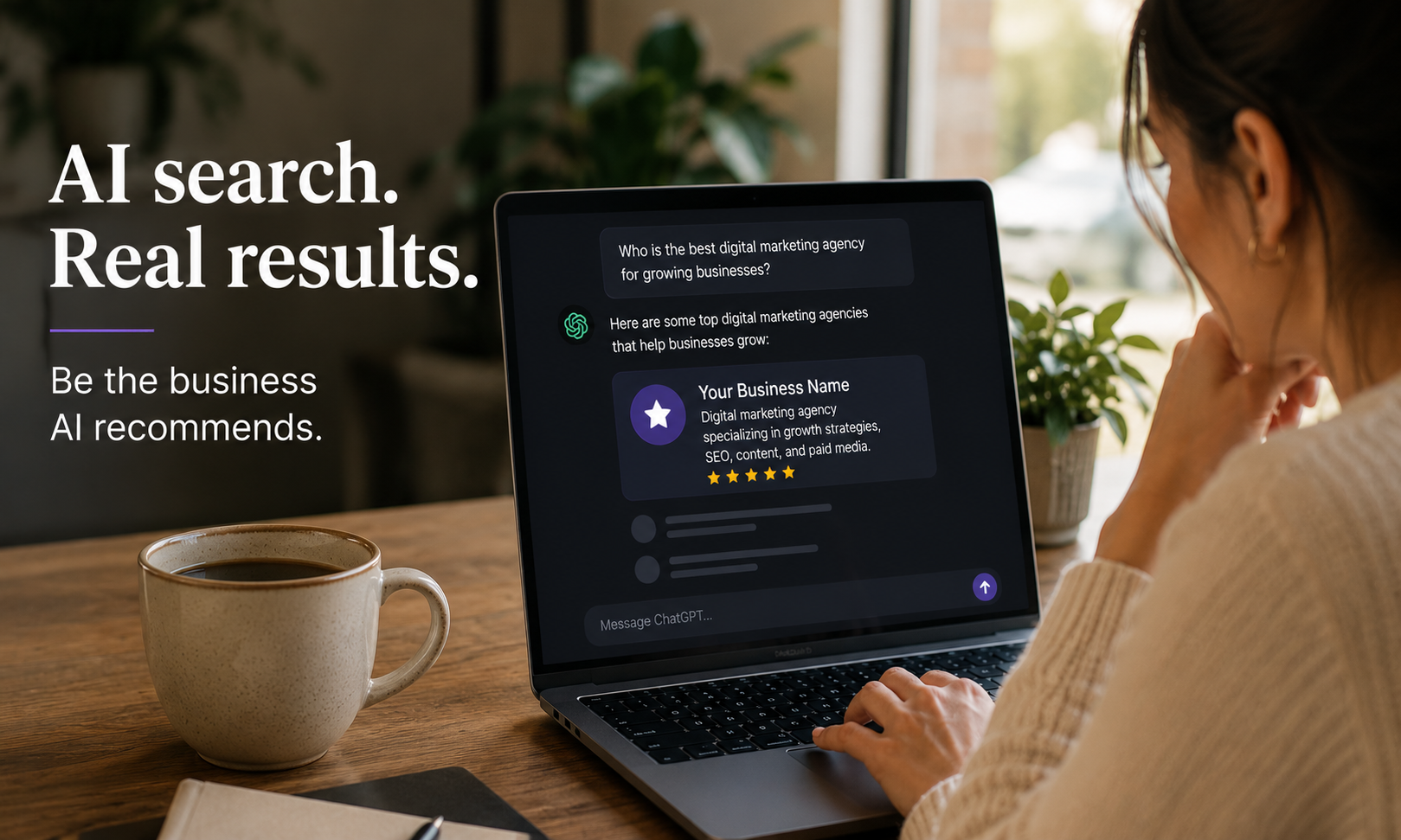
If your company is not part of those AI-generated answers, you are losing influence before the homeowner ever sees your website. By the time they submit a form, 60 to 80 percent of their decision may already be made.
The New Priority: SEO, AEO, and GEO
Traditional SEO is not dead. It is expanding into something more demanding.
Answer Engine Optimization asks whether your content can become the answer AI systems trust.
Generative Engine Optimization ensures large language models understand your brand clearly enough to include you in relevant conversations.
These are not separate strategies. They work together.
SEO gets your content found.
AEO gets your expertise extracted.
GEO gets your brand understood and cited.
Together, they create visibility even when the click does not happen.
The companies investing in clear, specific, locally relevant, expert-driven content right now are building an asset that compounds. The companies relying solely on paid search are renting visibility that is about to get more expensive.
AI Platforms Are Entering the Ad Game — Do Not Panic
Something we did not cover in the book but that you need to be aware of: AI answer engines are beginning to monetize.
Google is already testing and expanding ad formats inside AI-powered search experiences, including AI Overviews and AI Mode. Other AI platforms are also exploring how advertising may work inside conversational environments.
That should concern you, but it should not cause a knee-jerk reaction.
Here is the right way to think about it: understand what is happening, assess how it could benefit your business, and mitigate your risk by not putting all your eggs in one basket.
If you are building brand authority, strong content, clean first-party data, and a diversified presence across Google, AI search, review platforms, maps, video, and trusted local content, you are not dependent on any single channel changing its rules.
The companies that panic and make reactive decisions will misallocate budget. The companies that stay calm, stay informed, and stay diversified will be in a much stronger position when the dust settles.
What to Do Now
Audit your content for answer quality, not just keyword coverage. Your website should clearly explain where you operate, what you install, what makes you credible, and how you handle the real questions homeowners ask. Thin, generic content will be passed over by AI systems looking for authoritative, specific sources.
Strengthen your Google Business Profile, review presence, schema markup, and local landing pages. AI does not evaluate your company from one page. It reads your entire digital footprint and forms a confidence level about your brand. Inconsistencies reduce that confidence.
Evaluate whether Performance Max, AI Max for Search, Local Service Ads, and improved click-to-call ads make sense given your team’s operational capacity. These tools can extend your reach significantly, but only if you are set up to convert the demand they generate.
Start mapping your funnel properly. Your CRM stages, call outcomes, appointment status, proposal activity, and closed deals should be structured in a way that can inform bidding decisions. The next generation of Google Ads will reward the companies that send better data back into the system.
Plan for rising paid search costs by building organic authority now. The solar companies that dominate the next three to five years will be the ones that treated content as infrastructure — not a checkbox.
The Shift Is Already Happening
Zero-click search is not a future scenario. It is the current reality. Our clients are already seeing it in their keyword data. The buying journey has moved earlier and deeper into AI-assisted research.
At the same time, Google Ads is becoming more AI-driven, more intent-driven, and more dependent on the quality of the data advertisers provide. AI Max, Lead Intent Scores, improved click-to-call ads, and journey-aware bidding are all pointing in the same direction.
The future of solar advertising is not just about buying more clicks.
It is about understanding intent earlier, qualifying demand faster, feeding better data into the machine, and becoming the trusted answer before the homeowner ever fills out a form.
The companies that adapt — investing in SEO, AEO, and GEO, diversifying their ad mix, building real educational authority, improving lead-quality tracking, and accepting that brand presence now precedes the click — will have a measurable advantage as search continues to evolve.
This is not the end of digital marketing.
It is a more sophisticated version of it.
And for the operators willing to build for it, it may be the biggest visibility opportunity since the early days of search itself.